Sustainability / WEEE
The most sustainable server is the one that keeps running.
TAR’s environmental position is the same as its commercial one: reuse first, component recovery second, material recovery last. That order is not a marketing choice. A working unit is worth far more than the metal inside it, so the responsible route and the commercial route point the same way.
TAR's position, without the greenwash
Most of the environmental benefit in IT hardware was decided before the equipment was ever switched on. Manufacturing a server or a notebook consumes materials, energy and water; using it for another three years consumes comparatively little. That single fact drives everything TAR does with equipment it receives.
It also means TAR does not need to choose between doing the responsible thing and running a business. A working switch remarketed into a market that needs it is both the better environmental outcome and the better commercial one.
The order of preference
- Whole-unit reuse. The equipment goes back into service, somewhere, as it is.
- Component reuse. Drives, memory, processors, boards and power supplies are recovered from units that cannot be reused whole.
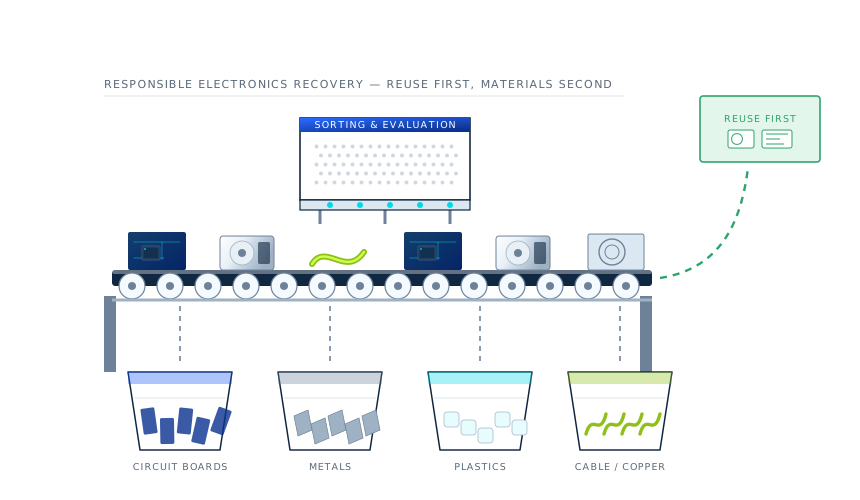
- Material recovery. What remains is separated into streams — circuit boards, metals, plastics, cable — and routed through appropriate recycling channels.
The order never reverses. Equipment is not sent to a recovery stream because evaluating it would take longer.
WEEE in practice
WEEE — waste electrical and electronic equipment — is the category IT hardware falls into once it genuinely reaches the end of its usable life. It is handled separately from general waste everywhere in the world, because it contains both material worth recovering and material that needs careful handling.
TAR's electronics recovery and WEEE solutions cover recycling coordination, recovery of valuable materials, responsible handling pathways and partner-supported recycling where required. Read the background in what is WEEE?
What TAR does not claim
- TAR does not hold or claim environmental, recycling or processing certifications.
- TAR does not publish carbon savings, diversion rates or recovery percentages. Figures like these are only meaningful when they are measured and audited, and TAR does not present estimates as evidence.
- TAR does not describe itself as a green, zero-waste or fully compliant business.
- TAR does not guarantee compliance outcomes on a supplier's behalf.
What TAR does claim is straightforward: reuse is prioritised, material is separated, and specialised partners are used where required.
What this means for suppliers
If your organisation reports on what happens to its retired equipment, ask TAR at the start what information can be provided and what cannot. TAR would rather set an accurate expectation than supply a report that does not stand up to scrutiny.
What separation looks like
Reuse first, materials second.
Equipment that cannot be reused is separated into streams rather than treated as one mixed waste category.
Answers
Sustainability questions.
Answered without figures TAR cannot evidence.
Sustainability questions
Is reuse better than recycling?
For working equipment, yes — substantially. Reuse keeps the manufacturing effort already invested in a device in service. Recycling recovers some material but discards everything else that went into making it. Recycling is the right answer only once reuse has genuinely been ruled out.
What environmental claims does TAR make?
Only descriptive ones. TAR states what it does — prioritise reuse, separate material streams, work with specialised partners where required. TAR does not publish carbon figures, diversion percentages or environmental statistics it cannot evidence.
Does TAR hold environmental certifications?
No. TAR does not hold or claim environmental, recycling or processing certifications. Where a supplier requires certified handling, TAR will say so plainly and work with specialised partners.
What is the circular economy in IT?
Keeping equipment, components and materials in use for as long as they are useful, instead of running a straight line from manufacture to disposal. In IT hardware that means reuse first, component recovery second, material recovery last.
Suppliers
Would rather see equipment reused than shredded?
That is the whole point of TAR. Send a list and we will tell you which lines can go back into service.
Start Supplier Discussion